Why Mangroves?
Mangroves are one of the planet’s most powerful natural climate solutions. Found along tropical and subtropical coastlines, these salt-tolerant trees form dense forests that anchor sediment, protect shorelines, and fuel marine biodiversity. Yet their most remarkable function lies unseen — beneath the surface, in the carbon-rich soils they stabilize.
Mangrove ecosystems store up to four times more carbon per hectare than terrestrial rainforests, locking away vast amounts of “blue carbon” in their roots and sediments for millennia. Despite covering less than 1% of tropical forests globally, they account for nearly 10% of all carbon burial in coastal oceans. When mangroves are lost to development or pollution, this stored carbon is released back into the atmosphere, amplifying climate change.
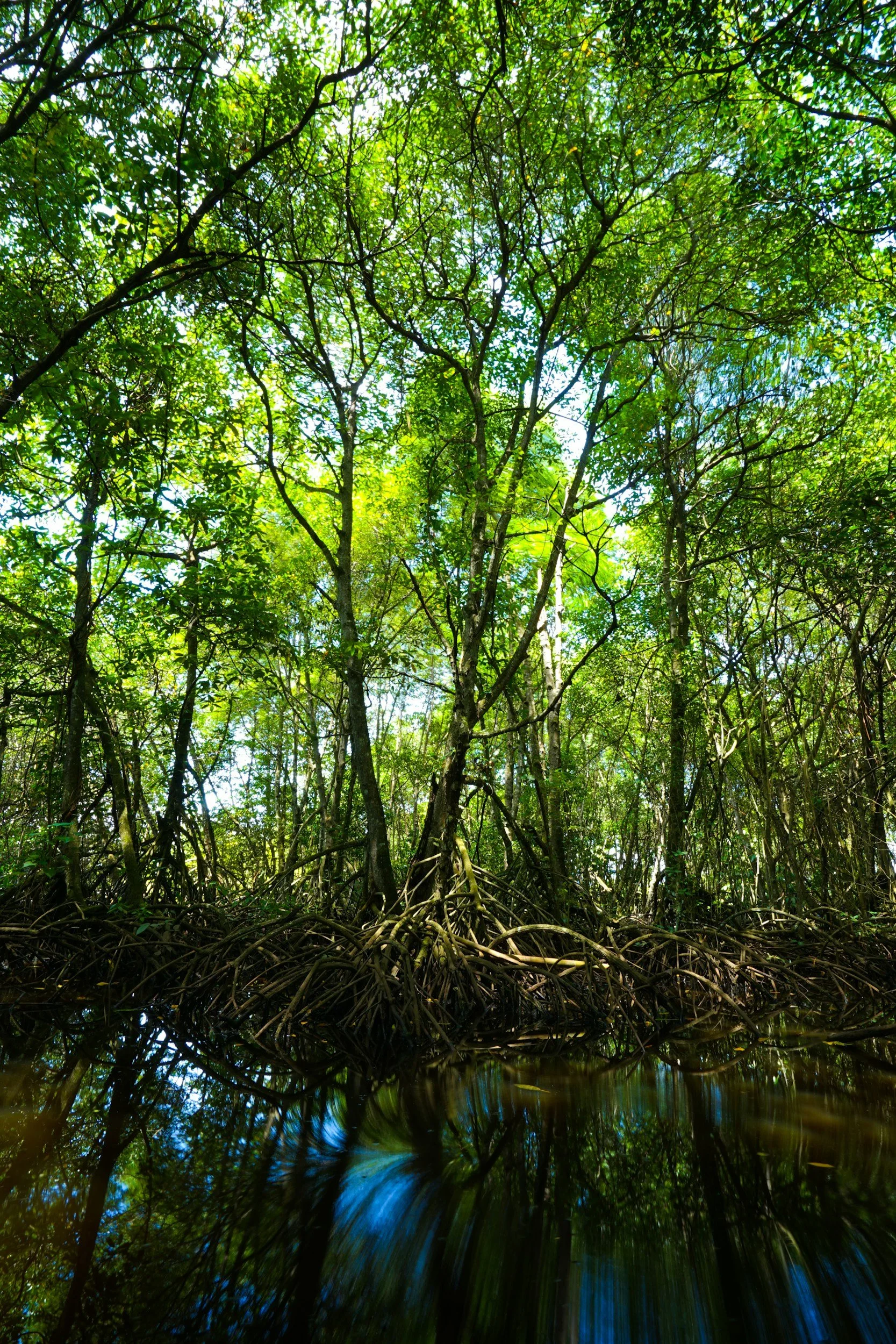

If everyone on Earth planted just seven mangrove seedlings a year, or restored a single bed of roots, we could regenerate enough forest to absorb one-third of annual global carbon emissions — bringing us within reach of the world’s critical goal of net-zero. Mangrove restoration is not just environmental recovery; it is climate engineering powered by nature, science, and collective action.
Beyond carbon, mangroves are biodiversity engines and climate shields. Their intricate root systems serve as nurseries for fish, crustaceans, and juvenile reef species, while buffering coastal communities from erosion, storm surge, and sea-level rise. Restoring mangroves doesn’t just sequester carbon — it safeguards livelihoods, fisheries, and water quality.